If you have ever watched English football in the 1990s or early 2000s, you have most likely heard the name Duncan Ferguson. Known as “Big Dunc,” this tall and powerful Scottish striker was one of the most exciting and tough players of his time. Even today, people are still curious about his life, his money, and what he is doing now.
Quick Bio
| Detail | Information |
|---|---|
| Full Name | Duncan Cowan Ferguson |
| Date of Birth | December 27, 1971 |
| Place of Birth | Stirling, Scotland |
| Nationality | Scottish |
| Height | 6 feet 4 inches (1.93 m) |
| Nickname | Big Dunc, Duncan Disorderly |
| Position | Striker (Centre-Forward) |
| Career Start | 1990 |
| Career End | 2006 |
| Clubs Played For | Dundee United, Rangers, Everton, Newcastle United |
| International Team | Scotland (7 caps) |
| Wife | Janine Ferguson |
| Children | Cameron, Ross, Evie |
| Estimated Net Worth (2026) | $5 million to $15 million (estimated) |
| Book Published | BIG DUNC: The Upfront Autobiography (May 2025) |
Early Life: A Boy From Stirling
Duncan Ferguson’s story did not begin with fame or fortune. He grew up in the modest surroundings of Stirling, Scotland, where he was born in 1971. In his working-class environment, Ferguson developed a strong sense of discipline and toughness early on, traits that would later define his footballing identity.
As a young boy, he loved football more than anything else. He played in local fields and quickly stood out because of his tall build and natural ability to score goals. Ferguson developed in grassroots football with Carse Thistle before signing professional terms with Dundee United in 1990. His size and timing in the air made him a mismatch at youth level, but it was his work rate and aggression that stood out to scouts.
His parents, Duncan Ferguson Sr. and Iris, were very supportive of his dream. They gave him the space to grow his passion for the game, and it paid off in a big way.
READ MORE Colin Cavill: The Life Story of Henry Cavill’s Father
Rise Through Scottish Football
Duncan Cowan Ferguson was born on 27 December 1971. He began his career at Dundee United in 1990, and moved to Rangers in 1993 for what was then a British transfer record fee.
This was a huge deal. Moving to Rangers for a record fee showed just how much potential people saw in him. He was still a young man, but clubs were already fighting to sign him.
At Rangers, he had some success but also faced challenges. One of his strike partners, Mark Hateley, said that Duncan was a really good player, but came to Rangers a couple of years too early, going from being a big fish in a small pond to a small fish in the big pond at Rangers, which he probably found difficult.
Even so, his time in Scottish football gave him the experience and strength he needed for the next big step.
Becoming an Everton Legend
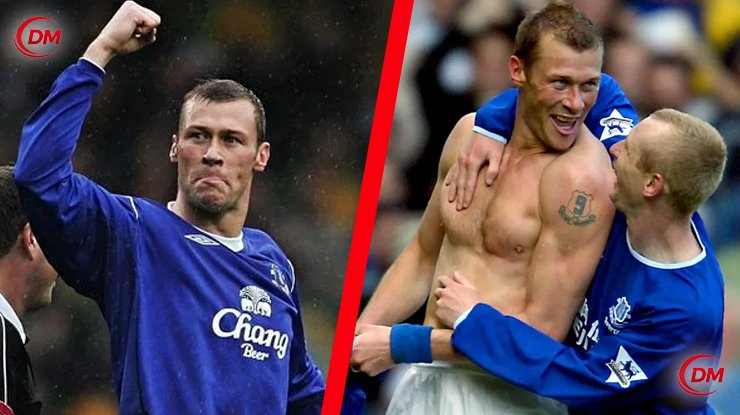
The move that truly changed Duncan Ferguson’s life was his transfer to Everton in 1994. He spent the last six years of his career playing at Everton, scoring 42 goals between 1994 and 1998. He retired in 2006.
At Everton, the fans fell in love with him instantly. He was strong, brave, and always gave 100%. The supporters gave him the nickname “Big Dunc,” and it stuck forever. During his career, Ferguson won the FA Cup with Everton in 1995. He has scored more goals than any other Scottish player in England’s Premier League since its creation in 1992.
One of his most remembered moments came on April 20, 2005, when he scored a header against Manchester United in a 1-0 win at Goodison Park. That kind of goal is what made fans adore him.
Culturally, Ferguson remains a cult hero, especially among Everton fans. His presence looms large in club folklore, with murals and chants dedicated to him still echoing in and around Goodison Park. In an age where footballers are often distant celebrities, Ferguson remains relatable: a working-class hero who never forgot his roots.
Newcastle United and Return to Everton
He spent the remainder of his career in England, moving to Everton in 1994 before a stint with Newcastle United between 1998 and 2000, after which he returned to Everton, where he retired in 2006.
His time at Newcastle was decent, but his heart was always at Everton. When he came back, the fans welcomed him with open arms. He finished his playing career at Goodison Park in 2006, going out as a true legend of the club.
How Much Money Did He Make From Football?
This is one of the biggest questions people ask about Duncan Ferguson. Here is what we know.
During his heyday, Ferguson reportedly earned £30,000 per week, or £1.5 million per year at Everton. In the 1990s and early 2000s, that was a very good salary. Football was becoming more commercial, and top players were getting paid very well.
In the summer of 2004, Everton attempted to buy out the final year of Ferguson’s contract, which was worth approximately £2 million in salary, for a reduced payment of £500,000. Ferguson rejected this offer.
Over his full playing career, he earned millions of pounds from contracts, bonuses, and transfer fees. However, as we will see next, not all of that money stayed in his pocket.
Financial Struggles: Bankruptcy and Lost Investments
This is one of the most honest and important parts of Duncan Ferguson’s story. Despite earning a lot of money during his playing days, he went through serious financial problems later in life.
Ferguson revealed the unwise investments he made at his peak. He spent £250,000 on a financial adviser who vanished with his money. He also bought land in Liverpool for £500,000 and spent another £500,000 on drawings and bills, and lost another £1 million on a housing plan that never received permission to build.
Poor investments, especially in land and tax-driven film schemes common in that era, stripped away millions and led to bankruptcy.
In 2016, the former footballer declared bankruptcy at the High Court in London after HM Revenue and Customs filed petitions against him.
His story is sadly not unique. Many footballers from that era made similar mistakes because they did not have proper financial advice. But what makes Ferguson different is that he was open and honest about his mistakes publicly so others could learn from them.
Life After Football: Coaching and Management
After retiring as a player in 2006, Duncan Ferguson did not leave football. He stayed close to the game as a coach and manager.
He took on coaching roles at Everton, including interim manager positions. Later, he moved into full management, including spells with Forest Green Rovers and Inverness Caledonian Thistle in Scotland.
His time managing Forest Green Rovers was tough. Forest Green were relegated to League Two, and he left the club on 4 July 2023. During his 18 games in charge, Forest Green Rovers won once.
He then moved to Inverness Caledonian Thistle in Scotland. Despite financial difficulties leading to the club’s administration in October 2024, Ferguson’s dedication was evident as he worked without pay to support the team. His actions highlighted his deep commitment to the sport and the communities he serves.
Working without pay to help a club in trouble says a lot about who Duncan Ferguson really is as a person.
Duncan Ferguson Net Worth in 2026
So, what is Duncan Ferguson’s net worth in 2026? The honest answer is that no exact public figure is available. Different sources give different estimates.
Although some sources indicate that Duncan Ferguson’s net worth is not publicly available, others claim that his worth lies between $5 million and $15 million. The Scotsman earned his money through his football career, coaching roles, and media work.
Most reliable estimates put the number somewhere around $5 million, taking into account his playing career earnings, coaching salaries, media work, and book sales.
He earned millions during his playing career, lost millions through failed investments, declared bankruptcy, and now earns through professional football and media work.
His net worth is not as large as some might expect for a Premier League star of his era, but that is because of the financial problems he faced. What is important is that he rebuilt his life after those tough times.
Media Work and Book Publication
In recent years, Duncan Ferguson has also been active in the media world.
In May 2025, Ferguson released his book, BIG DUNC: The Upfront Autobiography, in which he recounts his Everton career, his personal life, and time in prison. His media work also involves appearances on Stick to Football with Ian Wright and Gary Neville.
Publishing a book is not just good for the soul. It also adds to his income and keeps his name in the public eye. For a man who has had so many ups and downs, writing his own story must have felt very meaningful.
Personal Life: Family and Values
Away from the cameras and the stadiums, Duncan Ferguson is a family man.
Ferguson has been married to Janine Ferguson since 1989. The couple has three children, Cameron, Ross, and Evie, and they maintain a relatively private family life.
Ferguson’s son Cameron is also a professional footballer who plays for Connah’s Quay Nomads. It is lovely to see the next generation following in Dad’s footsteps.
Ferguson has been described as a “pillar of the community in Merseyside,” particularly in his work with disadvantaged children who share similar tough upbringings to his own.
He has always remembered where he came from, and that shows in the kind of person he is.
Legacy in Football
Duncan Ferguson may not have won as many trophies as some other players, but his legacy in football is very strong.
In 2025, Give Me Sport ranked him as the hardest footballer of all time.
He is remembered as someone who gave everything on the pitch, never backed down, and always played for the shirt. For Everton fans especially, he is not just a former player. He is a symbol of what it means to fight for the club.
His journey from a working-class boy in Stirling to a Premier League legend, through financial hardship and back again, is one of the most honest and inspiring stories in British football.
Final Thoughts
Duncan Ferguson’s story is about much more than money. It is about a boy from Scotland who worked hard, became a football legend, made mistakes, lost a lot, and then rebuilt himself with honesty and courage. His net worth in 2026 may not be the biggest among Premier League players of his era, but his personal worth as a human being is something you cannot put a price on.
He is a true working-class hero, and for many football fans, especially those who support Everton, there will never be another “Big Dunc.”
10 Frequently Asked Questions (FAQs)
- What is Duncan Ferguson’s net worth in 2026?
Duncan Ferguson’s estimated net worth in 2026 is between $5 million and $15 million, based on his football career earnings, coaching roles, media appearances, and book sales. However, no official figure has been confirmed publicly. - How much did Duncan Ferguson earn per week as a footballer?
At his peak at Everton, Duncan Ferguson reportedly earned around £30,000 per week, which equals about £1.5 million per year. - Did Duncan Ferguson go bankrupt?
Yes. In 2016, Duncan Ferguson was declared bankrupt at the High Court in London after HM Revenue and Customs filed petitions against him due to unpaid taxes and bad investments. - What clubs did Duncan Ferguson play for?
He played for Dundee United, Rangers, Everton (two spells), and Newcastle United during his professional career. - When did Duncan Ferguson retire from playing football?
Duncan Ferguson retired from professional football in 2006 after his final spell at Everton. - Is Duncan Ferguson still involved in football?
Yes. After retiring as a player, he moved into coaching and management, including roles at Everton (as assistant and interim manager), Forest Green Rovers, and Inverness Caledonian Thistle. - Does Duncan Ferguson have children?
Yes. He and his wife Janine have three children: Cameron, Ross, and Evie. His son Cameron is also a professional footballer. - What is Duncan Ferguson’s nickname?
He is widely known as “Big Dunc” because of his tall, powerful build. He was also sometimes called “Duncan Disorderly” because of his aggressive style of play. - Did Duncan Ferguson write a book?
Yes. In May 2025, he published his autobiography titled “BIG DUNC: The Upfront Autobiography,” in which he talks about his football career, personal life, and time in prison. - What is Duncan Ferguson’s biggest football regret?
He has said that making himself unavailable for the Scottish national team from 1997 due to a disagreement with the Scottish Football Association was his biggest football regret.
See more amazing Information, Dupper Magazine