
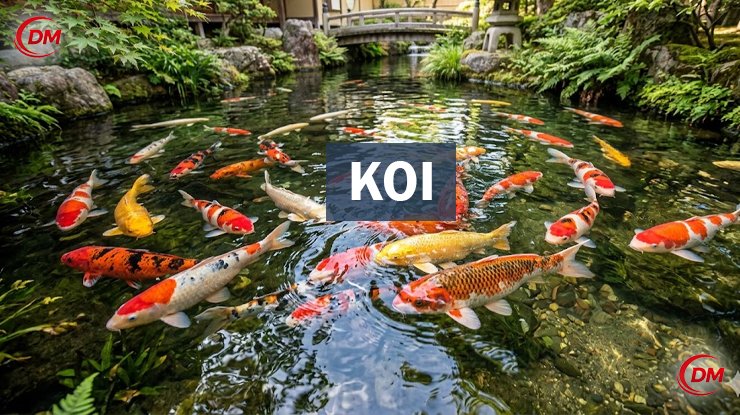
Have you ever seen a beautiful fish swimming slowly in a pond and thought, “What kind of fish is that?”If someone said “koi,” you might have nodded along without really knowing much about them. Or maybe you have heard the word “koi” in a Japanese song or anime and wondered if it means something else entirely.
Well, you are in the right place. This article will explain everything you need to know about koi. We will talk about the fish, the meaning of the word in Japanese, the history, the care, and why people all over the world love koi so much. Let us get started.
What Are Koi Fish?
Koi fish are large, colorful fish that live in ponds and water gardens. They are a type of carp, which is a common freshwater fish. But koi are not just any carp. Over many hundreds of years, people selectively bred them to have bright colors and beautiful patterns.
Today, koi come in many colors including white, black, red, orange, yellow, blue, and even gold. Some have spots, and some have patterns that look like paintings. No two koi fish look exactly the same, which is part of what makes them so special.
Koi are also quite big. A healthy adult koi can grow to about 60 to 90 centimeters (about 2 to 3 feet) long. Some very well-cared-for koi grow even bigger. They are peaceful fish and do not harm other fish, which makes them popular for garden ponds.
Where Do Koi Fish Come From?
The story of koi starts a very long time ago. The common carp originally came from Central Asia and China. People in China and Japan kept carp for food thousands of years ago. Around the 1800s, farmers in the Niigata region of Japan noticed that some of their carp had unusual colors. Instead of eating those fish, they kept them and started breeding them for their looks.
Over time, Japanese breeders developed more and more color varieties. By the 20th century, koi had become a popular hobby all over Japan. After World War II, koi were shown at exhibitions and eventually exported to other countries. Today, koi are kept in ponds and water gardens in almost every part of the world.
What Does “Koi” Mean in Japanese?
This is where things get interesting. In Japanese, the word “koi” can mean more than one thing depending on how you write it.
When written with the kanji character 鯉, “koi” means the fish we have been talking about.
But when written with the kanji character 恋, “koi” means romantic love or longing for someone. This is a deep kind of love, often described as the feeling you have when you miss someone or when your heart aches for another person.
So “koi” in Japanese can mean either a beautiful fish or a deep romantic feeling. This double meaning has made the word very poetic in Japanese culture. Songs, poems, and stories often play with this idea.
There is also a related word, “ai” (愛), which also means love in Japanese, but in a broader and more general sense. “Koi” (恋) is more specifically about the feeling of falling in love or longing, while “ai” is about a deeper, more lasting love. Both words are important in Japanese culture and are used in everyday language and literature.
READ MORE Candizi Guide: Simple Meaning, Uses, and What You Should Know About It
The Symbolism of Koi Fish
In Asian cultures, especially in Japan and China, koi fish have deep symbolic meaning. They are not just pretty fish. They represent ideas and values that people care about.
Strength and Perseverance: There is a famous story about a koi fish that swam upstream against a powerful current and eventually reached a waterfall. The fish kept trying to climb the waterfall despite many failures. According to the legend, the gods were so impressed by its determination that they turned it into a golden dragon. Because of this story, koi symbolize strength, determination, and never giving up.
Good Luck and Prosperity: In many Asian cultures, koi are seen as symbols of good fortune. Keeping koi in your garden or home is thought to bring luck and positive energy. This is why you often see koi ponds at temples, hotels, restaurants, and even businesses.
Love and Friendship: Because of the Japanese meaning of the word, koi also symbolize love and deep connection between people.
Transformation: The legend of the koi turning into a dragon also represents transformation and personal growth. This symbol is popular in tattoo art around the world.
Types of Koi Fish
Over the years, breeders have developed many different types of koi. Each type has its own name and specific pattern. Here are some of the most well-known varieties:
Kohaku: This is one of the most classic koi types. It has a white body with red or orange markings. Kohaku is considered the foundation of all koi varieties.
Taisho Sanshoku (Sanke): This variety has a white body with both red and black markings. It is very popular among koi enthusiasts.
Showa Sanshoku: Similar to Sanke, but the base color is black with red and white markings on top.
Ogon: A single-colored metallic koi. Ogon koi shine brightly in the water and are very eye-catching.
Bekko: These koi have a solid white, yellow, or red base with black spots.
Asagi: A blue or gray koi with a red or orange pattern on the belly and fins.
Butterfly Koi: These are not a traditional Japanese variety but have become popular worldwide. They have very long, flowing fins that look like butterfly wings.
There are actually more than 100 recognized varieties of koi today, and breeders continue to develop new ones.
How Long Do Koi Live?
One of the most surprising things about koi is how long they can live. With good care, koi can live for 25 to 35 years. Some koi live even longer.
The most famous example is a koi named Hanako, which was said to have lived in Japan for 226 years. While this is an extraordinary and rare case, it shows just how long koi can live when they are well taken care of.
Because koi can live so long, many families pass their koi from one generation to the next. In Japan, a family’s pond of koi is sometimes considered a family treasure.
How to Care for Koi Fish
If you want to keep koi, you need to be prepared to give them good care. Here are the key things to know:
Pond Size: Koi need a lot of space. A healthy koi pond should hold at least 1,000 gallons of water. The bigger the pond, the happier and healthier the fish will be.
Water Quality: Koi are sensitive to water quality. You need a good filtration system to keep the water clean. You should also test the water regularly for things like pH levels, ammonia, and nitrite.
Feeding: Koi eat a variety of foods including specially made koi pellets, vegetables, and even fruit. You should feed them two to four times a day during warm months. In winter, when the water gets cold, koi slow down and eat much less.
Temperature: Koi do best in water that is between 15 and 25 degrees Celsius (about 59 to 77 degrees Fahrenheit). They can survive in colder water but become less active.
Health: Watch for signs of illness like unusual spots, torn fins, or changes in behavior. Koi can get sick from parasites, bacteria, or poor water quality. Early treatment is important.
Predators: In outdoor ponds, koi can be eaten by birds like herons, or by raccoons and cats. Netting over the pond can help protect them.
Koi in Art and Culture
Koi have inspired art for centuries. In Japan, koi are a common subject in traditional paintings, woodblock prints, and ceramics. During the Children’s Day holiday in Japan (celebrated on May 5th), families fly large fish-shaped flags called “koinobori” (鯉のぼり). These colorful flags represent koi fish and are flown to wish children strength and success in life.
In modern times, koi have become very popular in tattoo art around the world. A koi tattoo often carries the meaning of strength, transformation, or good luck. The direction the koi is swimming in the tattoo can also have different meanings. A koi swimming upstream is said to represent a person who is still facing challenges, while one swimming downstream means the person has already overcome their struggles.
Koi also appear in anime, manga, video games, and movies. Their beautiful appearance and symbolic meaning make them a perfect subject for storytelling.
Why Are Koi So Expensive?
You might be surprised to learn that some koi fish cost as much as a car, or even more. The most expensive koi ever sold was a kohaku named “S Legend” that was sold for about 1.8 million US dollars in Japan in 2017.
Why are some koi so valuable? The price of a koi depends on several factors:
- Color and pattern: The more balanced, vivid, and unusual the pattern, the more valuable the fish.
- Body shape: A good koi should have a smooth, symmetrical body with well-proportioned fins.
- Age: Older koi that have maintained their color and health are more valuable.
- Bloodline: Koi from well-known Japanese breeders are considered higher quality.
- Size: Larger koi generally cost more.
For most hobbyists, good-quality koi are affordable. You can find healthy, attractive koi for anywhere between a few dollars to a few hundred dollars. Very expensive koi are mostly bought by serious collectors and breeders.
Koi Ponds Around the World
While koi ponds are most common in Japan, they have become popular everywhere. You can find koi ponds in:
- Botanical gardens and parks in the USA, Europe, and Asia
- Buddhist temples across Japan and other Asian countries
- Hotels and resorts that use koi ponds as a calming decorative feature
- Private homes where garden ponds with koi have become a popular hobby
- Restaurants that keep koi ponds both for decoration and as a sign of prosperity
Building a koi pond has become a form of art itself. Pond designers use careful planning to create ponds that are both beautiful and functional. Some koi ponds are simple and natural-looking. Others are elaborate, with waterfalls, plants, bridges, and lighting.
Koi and Mental Health
Many koi keepers say that watching koi swim is deeply relaxing. There is even some research to support this. Watching fish swim in an aquarium or pond has been shown to reduce stress, lower blood pressure, and improve mood.
Koi are quiet, slow-moving, and graceful. Their gentle movement and bright colors can be very calming after a long, stressful day. Some hospitals and care homes use fish tanks and ponds as part of a calming environment for patients.
This is another reason why koi ponds have become so popular. They are not just beautiful to look at. They also help people feel better.
Final Thoughts
Koi are more than just fish. They carry with them hundreds of years of history, deep cultural meaning, and a kind of beauty that is hard to explain in words. Whether you are drawn to them because of their colors, their symbolism, or the peaceful feeling they bring, it is easy to understand why so many people around the world love them.
If you ever have the chance to sit beside a koi pond and watch these graceful fish move through the water, take a moment to enjoy it. There is a reason people have valued koi for so long. They remind us to be patient, to keep going even when things are hard, and to find beauty in the world around us.
And if someone ever asks you what “koi” means, now you have a full answer.Share
Frequently Asked Questions (FAQs)
1. What does “koi” mean in English? “Koi” is a Japanese word. In English, it refers to the large colorful fish kept in ponds. But in Japanese, “koi” can also mean romantic love or longing, depending on how it is written.
2. Are koi fish difficult to keep? Koi need proper care, but they are not too difficult to keep if you set up the right environment. You need a large, clean pond with good filtration. Once the pond is set up properly, daily care is simple.
3. Can koi live with other fish? Yes. Koi are peaceful fish and can live with many other types of fish, including goldfish. Just make sure the other fish are not too small, as koi might accidentally eat very tiny fish.
4. How big do koi get? Most koi grow to about 60 to 90 centimeters (about 2 to 3 feet). Some can grow even larger with a very large pond and good nutrition.
5. Why do people keep koi? People keep koi for many reasons. They are beautiful and relaxing to watch. They also have deep symbolic meaning in many cultures. Many people find caring for koi to be a rewarding hobby.
6. What do koi eat? Koi eat specially made koi pellets, vegetables like lettuce and peas, fruit, and even insects. They are omnivores and enjoy a varied diet.
7. How can you tell the difference between koi types? Each koi variety has a specific pattern and color combination. For example, Kohaku has red on white, while Ogon is a solid metallic color. Learning the varieties takes time, but it becomes easier the more you observe them.
8. Do koi fish recognize their owners? Yes, koi can learn to recognize the person who feeds them. Over time, they may swim to the surface and even eat from your hand. This makes them feel more like pets than typical fish.
9. Is it lucky to have koi? In many Asian cultures, yes. Koi are believed to bring good luck, prosperity, and positive energy. This is why they are often kept in businesses and homes.
10. What is the connection between koi fish and love in Japanese culture? The Japanese word “koi” (恋) means romantic love or longing. Because the fish shares the same sound as this word, koi fish have become connected to themes of love and deep emotion in Japanese poetry, songs, and stories.
See more amazing Information, Dupper Magazine