
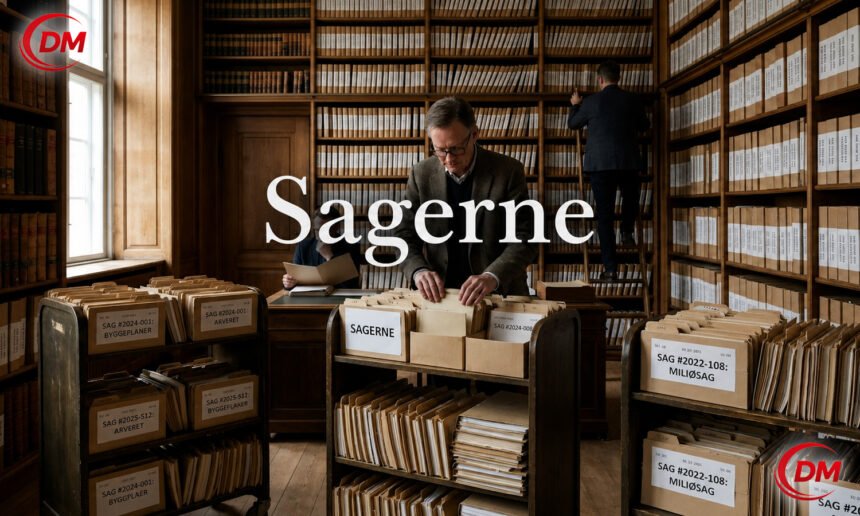
Have you ever come across the Danish word sagerne and wondered what it means? You are not alone. Many people who are learning Danish or who have come across Danish text find this word a little confusing at first. But do not worry. By the end of this article, you will have a very clear idea of what sagerne means, how it is used, and why it matters in everyday Danish.
What Does Sagerne Mean?
The word sagerne is a Danish noun. It is the definite plural form of the word sag, which means “matter,” “case,” “thing,” or “affair” in English.
So when you put it simply:
- Sag = a case, a matter, or a thing
- Sager = cases, matters, or things (plural)
- Sagerne = the cases, the matters, or the things (definite plural)
In Danish, when you want to say “the things” or “the matters” in a specific way, you add the suffix -ne to the plural form. This is how Danish grammar works with definite forms. So sagerne is just the way Danish speakers say “the things” or “the cases” when they are talking about something specific that has already been mentioned or is clearly understood.
How Danish Grammar Works Here
To really understand sagerne, it helps to look at Danish grammar for just a moment. Do not worry, it is not too complicated.
In Danish, nouns can be either common gender (called fælleskon) or neuter gender (called intetkøn). The word sag is a common gender noun.
Here is how the forms work:
| Form | Danish | English |
|---|---|---|
| Singular indefinite | en sag | a case / a matter |
| Singular definite | sagen | the case / the matter |
| Plural indefinite | sager | cases / matters |
| Plural definite | sagerne | the cases / the matters |
So sagerne is simply the last step in this pattern. It means you are talking about specific things or cases, not just any random ones.
Everyday Uses of Sagerne
Now that you know the grammar, let us look at how sagerne is actually used in real Danish conversations and writing.
1. In everyday speech
Danish people use sagerne very naturally in daily life. For example:
- “Hvordan går det med sagerne?” means “How are things going?” or more literally, “How are the matters going?”
- “Vi må tage sagerne som de kommer.” means “We have to take things as they come.”
These are phrases you might hear in casual conversation between friends or colleagues.
2. In legal and official contexts
In Denmark, the word sag is very commonly used in legal and administrative settings. A “sag” can mean a legal case, a court case, or a file in a government office. So sagerne in this context means “the cases” or “the files.”
For example, a lawyer might say: “Sagerne er komplicerede” which means “The cases are complicated.”
Government offices in Denmark often talk about “sagerne” when they mean the official files or applications they are processing. If you have ever dealt with Danish public services, you may have heard a clerk say something like “Vi behandler sagerne i den rækkefølge, de er modtaget” which means “We process the cases in the order they were received.”
3. In news and media
Danish newspapers and news programs also use sagerne very often. Journalists might write about political matters, corruption cases, or important events using this word.
For example: “Sagerne har vakt stor opmærksomhed” means “The cases have attracted a lot of attention.”
4. In work settings
In an office or workplace in Denmark, colleagues might use sagerne when talking about their workload or projects. It is a very natural and neutral word that fits many situations.
Why Is This Word So Common?
The reason sagerne appears so often in Danish is that the root word sag is incredibly versatile. It can refer to almost any kind of matter, issue, topic, or case. Because it is so flexible, it gets used in a very wide range of situations.
Compare it to the English word “matter” or “thing.” These words show up in countless sentences because they are so general. The same is true for sag and sagerne in Danish.
Some related words and phrases you might find useful:
- Sagsbehandler = caseworker (someone who handles cases)
- Sagsfremstilling = case presentation or case summary
- Det er ikke min sag = “That is not my business” or “That is not my concern”
- Sagen er den = “The thing is…” or “Here is the matter…”
Sagerne in Formal Writing vs. Spoken Danish
One interesting thing about sagerne is that it works well in both formal and informal settings. In spoken Danish, people use it in a relaxed, everyday way. In formal documents, reports, and legal texts, it is used in a more precise and serious way.
This flexibility makes sagerne one of those words that Danish learners really benefit from knowing early on. Once you understand it, you will start noticing it everywhere, from news articles to official letters to normal conversations.
Tips for Learning and Remembering Sagerne
If you are learning Danish, here are a few simple tips to help you remember sagerne and use it correctly:
Connect it to English words you already know. Think of sagerne as similar to saying “the matters” or “the cases” in English. When you hear it, picture someone talking about a group of specific things or issues.
Practice with simple sentences. Try making short sentences using sagerne in everyday contexts. For example: “The things are ready” or “The cases are done.” This will help you feel comfortable with the word.
Listen to Danish media. Danish radio, podcasts, and TV shows are great for hearing how native speakers use sagerne naturally. Even if you do not understand every word, hearing it in context helps a lot.
Notice the grammar pattern. Remember that the -ne ending is a sign that the noun is definite and plural. This pattern applies to many Danish nouns, so learning it with sagerne helps you understand other words too.
Common Phrases Using Sagerne
Here are some common and useful phrases that include sagerne. These will give you a better feel for how the word is really used:
- “Sagerne tager tid” = “These things take time”
- “Sagerne er under kontrol” = “Things are under control”
- “Hvem tager sig af sagerne?” = “Who is taking care of things?”
- “Sagerne hænger sammen” = “The matters are connected”
- “Lad os gennemgå sagerne” = “Let us go through the matters/cases”
These phrases are natural and practical. You might hear or read them in many different situations.
Sagerne and Danish Culture
Language always reflects culture, and sagerne is a good example of this. Danish society places a strong value on order, fairness, and handling things properly. The word sag, and by extension sagerne, shows up a lot in discussions about rights, responsibilities, and processes.
Denmark has a strong tradition of transparent governance and public administration. Citizens regularly interact with government “sager,” whether for health services, housing, or employment matters. Knowing this word gives you a small but meaningful window into how Danish society organizes itself.
In a broader cultural sense, the way Danes talk about “sagerne” reflects a practical mindset. Rather than being dramatic, they tend to talk about issues and problems in a calm and matter-of-fact way. Saying “lad os tage sagerne en ad gangen” (let us take things one at a time) is a very Danish way of approaching challenges.
A Quick Summary
Let us bring it all together:
- Sagerne is the definite plural form of the Danish noun sag
- It means “the cases,” “the matters,” or “the things”
- It is used in everyday speech, legal contexts, news, and official writing
- The grammar follows a regular pattern common in Danish nouns
- Understanding sagerne helps you understand Danish culture and communication
Whether you are a Danish language learner, someone doing business in Denmark, or just a curious person who came across this word, knowing sagerne is genuinely useful. It is one of those everyday words that pops up again and again, and once you know it, Danish texts and conversations become a little easier to follow.
10 Frequently Asked Questions About Sagerne
1. What does sagerne mean in English? Sagerne means “the cases,” “the matters,” or “the things” in English. It is the definite plural form of the Danish word sag.
2. Is sagerne used in formal or informal Danish? It is used in both. In informal speech, it can mean “things” in a general sense. In formal or legal settings, it refers to specific cases or official matters.
3. How do you pronounce sagerne? It is pronounced roughly as “sah-er-neh” in Danish. The “g” in sager is soft, almost silent, which is typical in Danish pronunciation.
4. What is the singular form of sagerne? The singular indefinite form is “en sag” (a case/matter). The singular definite form is “sagen” (the case/the matter).
5. Can sagerne refer to legal cases? Yes, absolutely. In legal and administrative Danish, sagerne very often refers to court cases, official files, or applications being processed.
6. Is sagerne a common word in Danish? Yes, it is very common. Because the root word sag is so flexible and widely used, sagerne appears frequently in both spoken and written Danish.
7. How is sagerne different from sager? Sager is the indefinite plural, meaning “cases” or “matters” in general. Sagerne is the definite plural, meaning “the cases” or “the matters,” referring to something specific.
8. Can a beginner Danish learner use sagerne correctly? Yes. Once you understand the basic rule that -ne makes a noun definite and plural, you can use sagerne correctly in many everyday sentences.
9. Are there similar words to sagerne in Danish? Yes. Words like tingene (the things), forholdene (the conditions/circumstances), and spørgsmålene (the questions) follow the same grammatical pattern.
10. Why is it helpful to learn sagerne when studying Danish? Because it is used in so many different situations, from casual talk to official documents, learning sagerne gives you a useful and versatile tool for understanding and speaking Danish more naturally.
See more amazing Information, Dupper Magazine